Three Coloradoan Clematis
Now for those of you out there who are avid gardeners I doubt the name "Clematis" needs much introduction: practically since childhood, I understood these – by appearance if not by name – as the deep purple flowers that grew on a vine behind my grandparents' house. Their petals had an unusual texture, and the center of the bloom held a cluster of little filamentous flower parts (being four or five, I couldn't yet identify these as stamens and pistils). Perhaps this was also your understanding of the genus: the weird leathery flower growing in someone else's (or maybe your own) garden.
In all likelihood, your sole association with this genus is Clematis 'Jackmanii:' a hybrid of the eastern Chinese species C. lanuginosa and the Mediterranean C. viticella. Since its early cultivation in the mid-to-late nineteenth century, this particular cultivar has enjoyed a generic monodominance in the nursery trade for its prolific blooms and seasonal hardiness (down to USDA Zone 4). The latter quality has made it an especially popular ornamental in the United States, where it's widely employed in suburban home gardens – hence our common experience with them.
But of course, there's more to this group than just a handful of ornamentals: Clematis is a prolifically large genus – the second-largest in the family Ranunculaceae – containing roughly 380 species distributed throughout the temperate northern hemisphere. Of those documented, there are maybe 36 endemic to North America, and out of that number I am aware of four Coloradoan species. With the exception of C. occidentalis (ironically the most cosmopolitan overall), I've seen each of them in situ:
Clematis hirsutissima
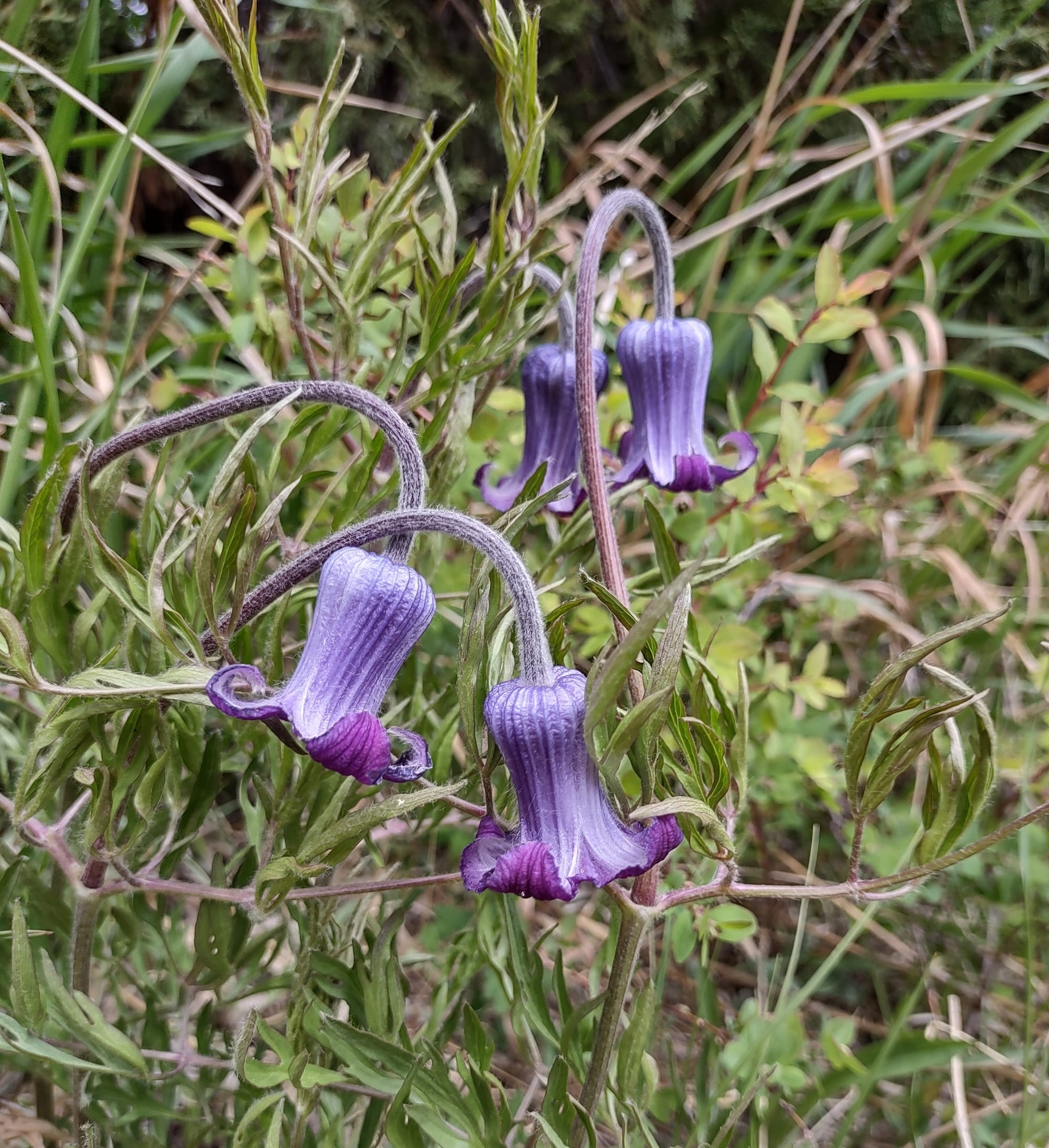
Not to give the game away too early, but when I speak in terms of plant biology you might notice I have a hair-trigger for dissoi logoi: "generally," "broadly speaking," "this tends to be the case." This isn't (just) because I am a fraud, but has more to do with the fact that – speaking from experience – there's nothing that dissuades you from dealing in absolutes quite like a biological education. Biology is a fluid, erratic, often improvisational science, and while it's necessary to describe broad trends as best we can surmise them, it also helps to leave room for an organism to zag – even where the evidence indicates they should zig. Here to help demonstrate my point is Clematis hirsutissima.
Now by and large, Clematis are characterized by their vining habit: the vast majority of Clematis species are tendrilous climbers, but here and there we have a handful of upright, self-supporting herbaceous species. The Hairy Clematis is one of these anomalies: often found growing in shortgrass meadows, talus slopes and mixed-pine understories, this plant stands at around a foot tall without structural assistance. It has nodding, bell-shaped flowers that never open entirely, and of the three species we'll be discussing today it's perhaps my favorite. It also boasts the most limited range of the three, stochastically distributed over lower-elevation zones of the Southern Rockies.
Also worth noting is C. hirsutissima var. scottii, which in older publications you might simply find under the discontinued synonym "Clematis scottii." This subspecies is found in Southern Colorado with limited populations down into Northern New Mexico.
Clematis columbiana
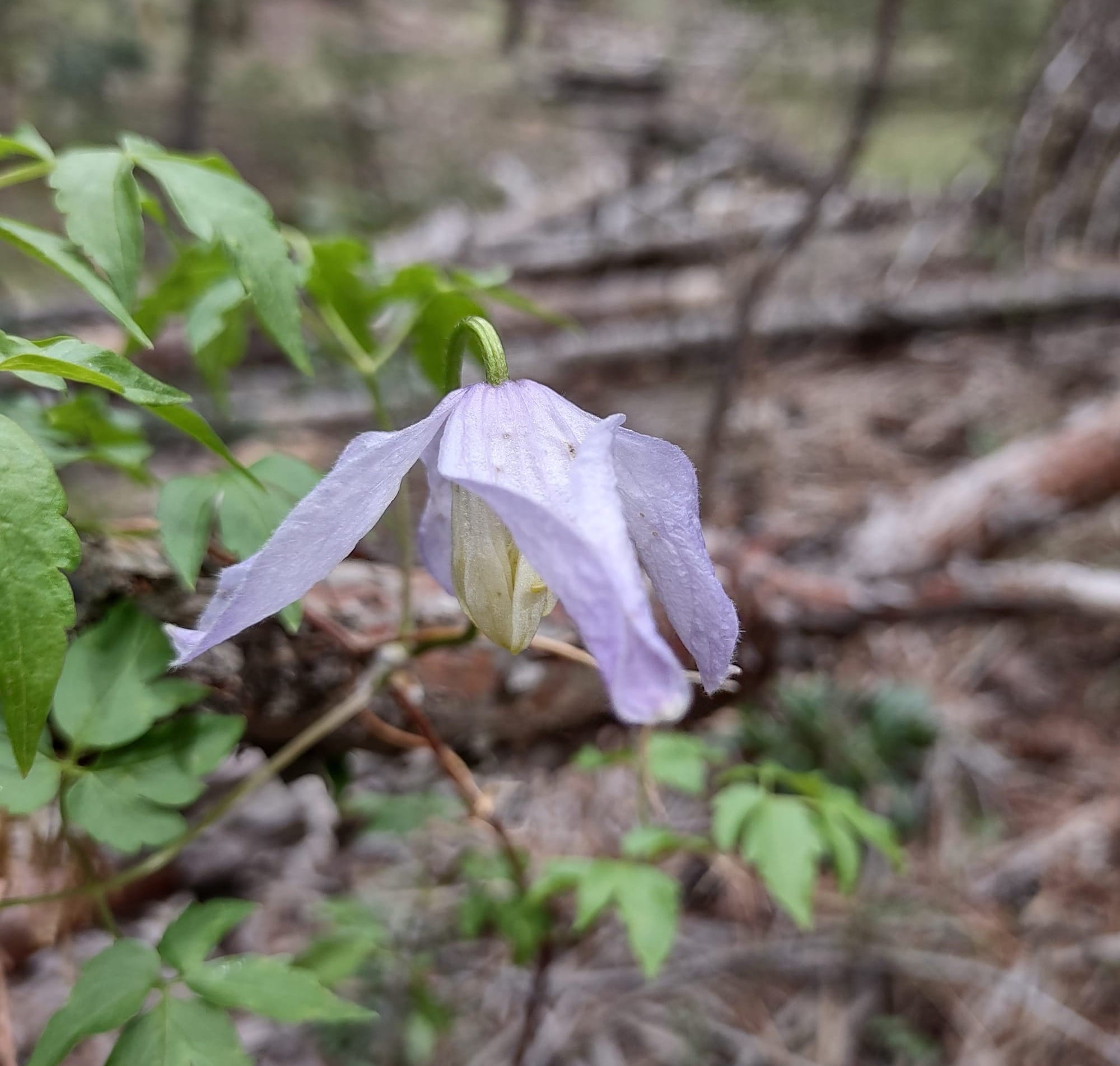
I mentioned right off the bat that I haven't seen the western clematis – C. occidentalis – in situ. Now to my knowledge this is true, but I'd like to entertain another possibility: that I've actually seen it, but inadvertently mistook it for a second species.
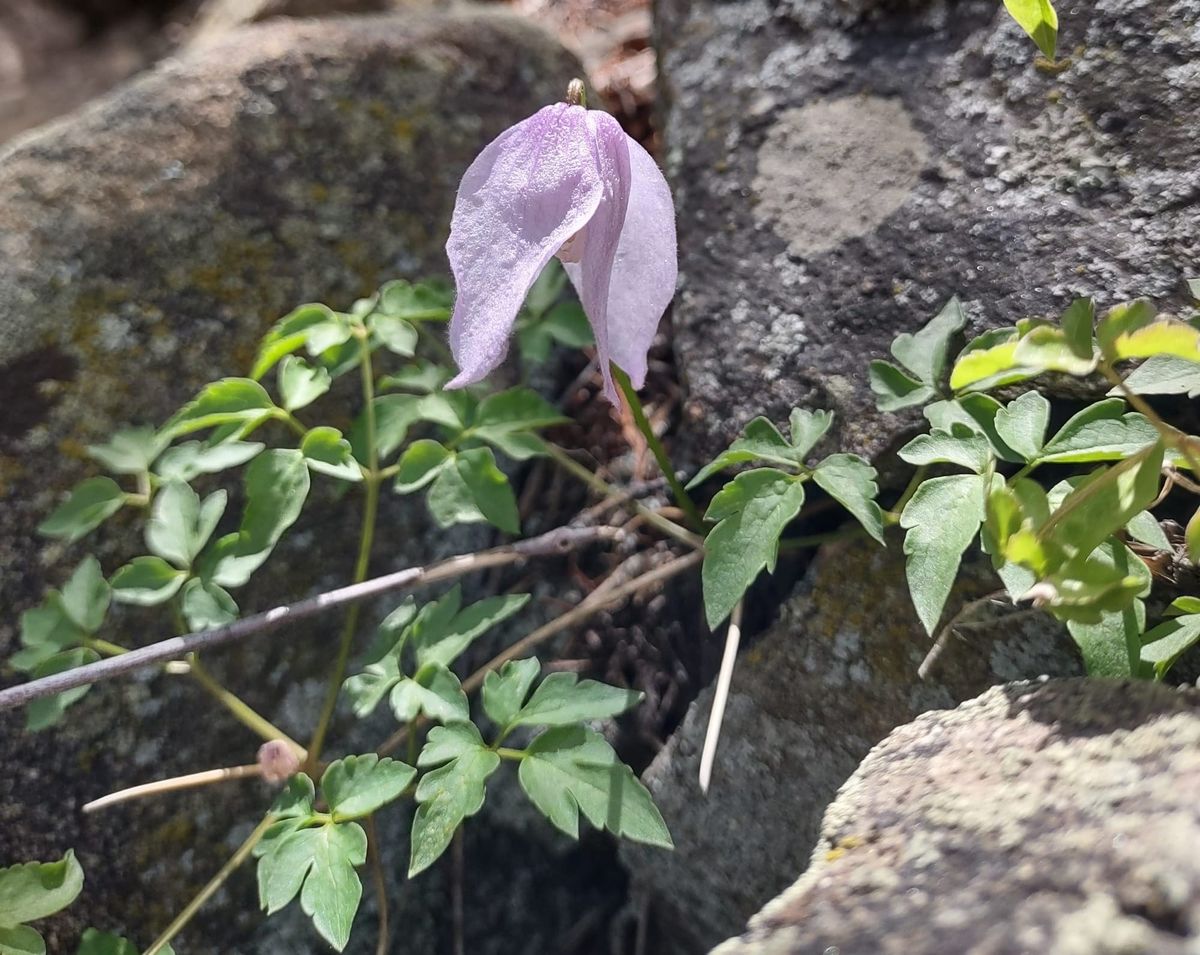
The species in question is the blue clematis: C. columbiana – a close relative to occidentalis that enjoys a more limited range than its cousin (though to its credit, this species can be found across the intermountain west). In my defense these two plants share a complicated and intertwined history: the name "Clematis columbiana" has historically been misapplied to a subspecies of C. occidentalis, and not without an understandable reason – these two are virtually identical.
The great differentiator lies – as it so often does between species – in the leaves: C. occidentalis is identified by its entire margins, where C. columbiana boasts smaller, deeply-lobed leaflets (this is somewhat discernible in the photo provided). I'm notoriously bad at checking the leaves when I identify plants (iNat users hate me), and so it could very well be that I've seen occidentalis before and fudged the ID.
Clematis ligusticifolia
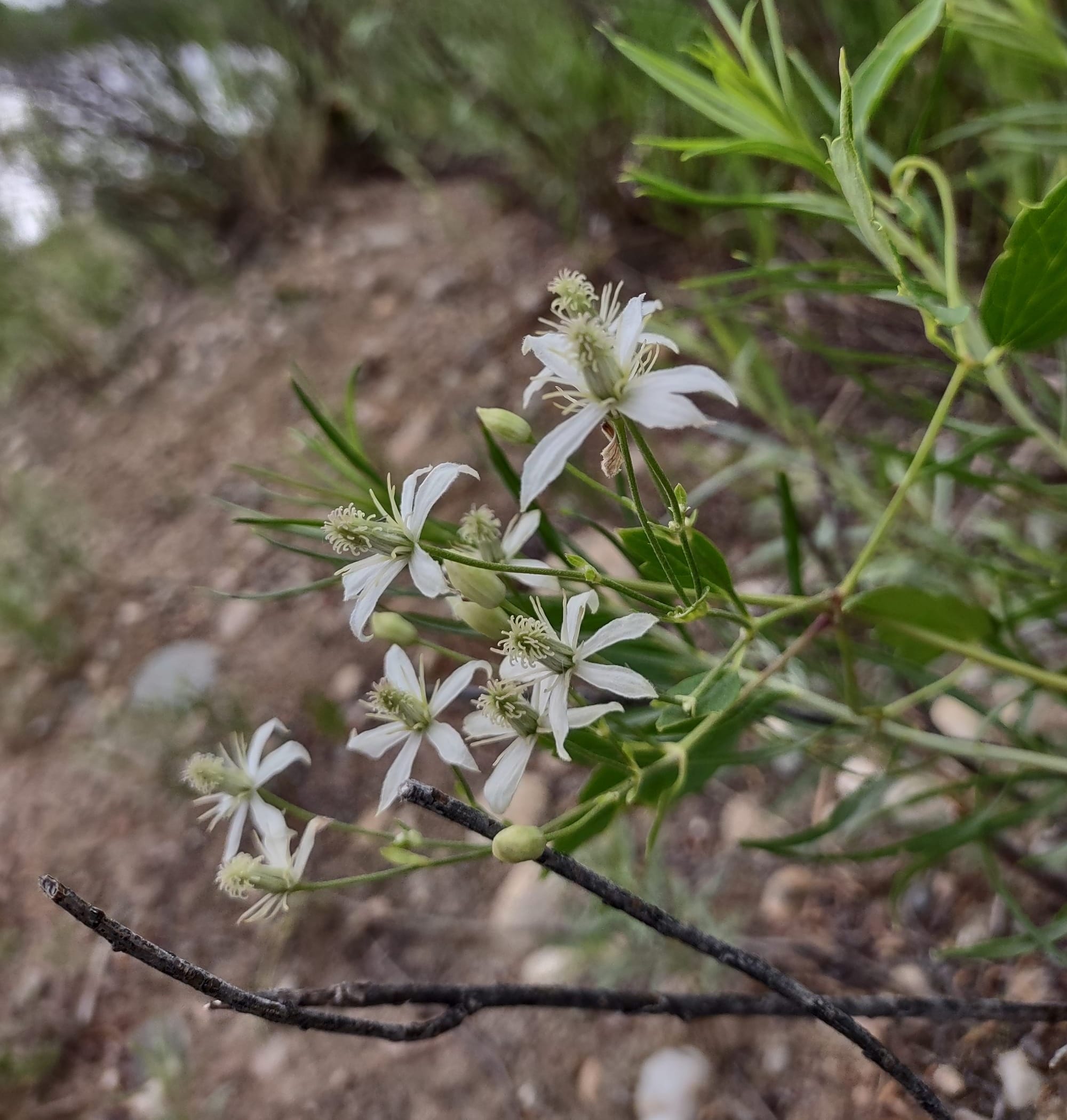
In getting well-acquainted with binomials, you start to see some general trends between the worst ones: ugly latinizations of modern names, an unintelligible excess of either vowels or consonants, and the tendency to bend over backwards to make a comparison. Our final clematis – C. ligusticifolia – suffers from this third affliction. What the specific epithet intends to convey, in this case, is that this species has leaves similar to those of Lovage (or maybe, to Scot's lovage – Ligusticum scoticum – as proper lovage has since been moved to the genus Levisticum). Not to slight Thomas Nuttall, who named the species, but if a binomial requires any more than two Wikipedia articles to be understood, that's a bad name.
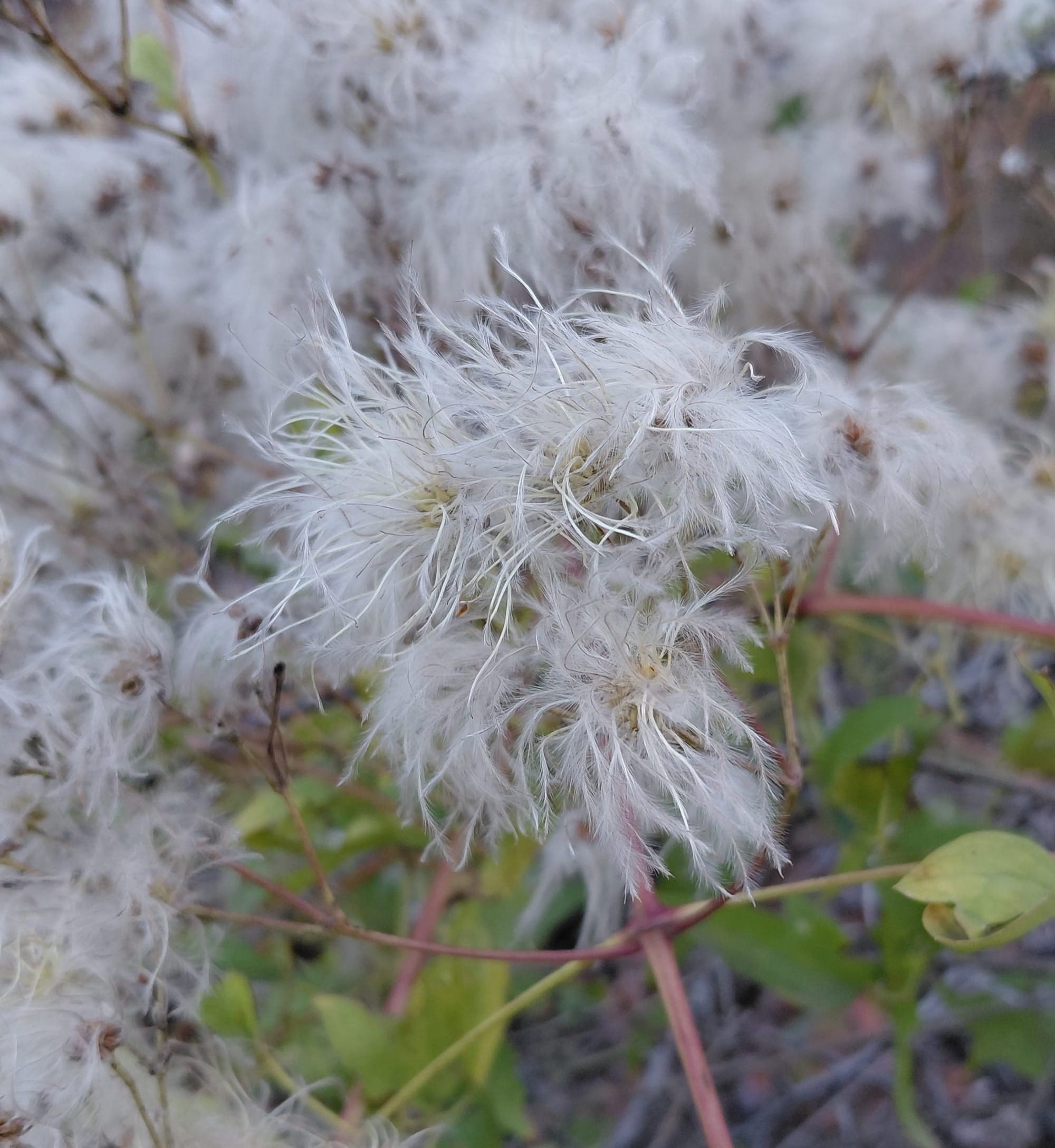
Boasting the widest range of the species we've discussed today, the Western White Clematis can be found all across the Western United States, with populations extending north into Canada and south into Mexico. This species is dioecious (a trait it appears to share with C. occidentalis, but not necessarily with our other Clematis species) and blooms in profuse clustered infloresences. One of the many common names for this plant – "old man's beard" – refers to its showy infructescense. All clematis flowers (to my knowledge) develop into follicular achenes when pollinated, but with C. ligusticifolia's floral density these structures give the plant a floccose appearance that lasts well into winter dormancy.
One of the other names – "pepper vine" – has a story behind it: apparently during western expansion, when it was difficult to source black pepper to the American Interior, settlers would crush up the seeds of C. ligusticifolia to use as a crude substitute. I would not advise this, however: while clematis seeds have a distinct essential oil profile, they're also purported to contain toxins and irritants that – when ingested in excess – cause internal bleeding.