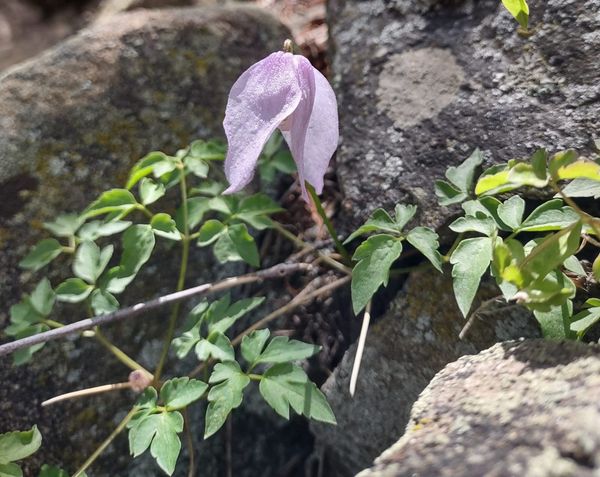
Nature Walk: Centennial Cone Park
Centennial Cone Park is a trail located between Golden, Black Hawk and Rollins Colorado, circumnavigating the mountain of the same name. It's an open space of about 3.5 thousand acres with roughly 16 traversable trail miles. In a gauntlet of heavily-used trails it's something of an open secret: boasting at this moment a lower foot-traffic than the nearby Clear Creek, Mount Galbraith and Golden Gate Canyon spaces. It's a wonderfully representative slice of the high plains and foothills biome, once ubiquitous throughout the Denver Metro Area.
I've been aware of this trail for about a decade, but my first substantial hike happened sometime in October 2019. I was just out of college, had yet to find a proper job, and by that same token was blessed with an abundance of free time to hike. I had been on this trail a couple times but had never gone very far, so when I reached a fork in the road with a posted sign designating "Evening Sun Loop," I pressed onward thinking – naturally – that this was the loop, and it would circle back around. It didn't matter to me that this stretch of the trail looked completely unfamiliar, and seemed to veer sharply away from my original starting point – it was a loop, right? Surely it would lead me back to my car.
I guess in a way I wasn't wrong for thinking this: if you look at the map, all trails invariably bend back toward the Ralph Schell trailhead, where I had originally started. But I wasn't on the evening sun loop anymore, I had actually taken the Travois Trail, which wraps around the whole mountain. This trail also returns to the Ralph Schell parking lot, but instead of a brisk 1.2 miles this trail takes 16. I don't know how far I took it in retrospect – I like to think I made it pretty close to Clear Creek on the other side of the mountain – but after maybe 2.5 hours of hiking my social anxiety gave out and I asked a pair of hikers how far we were from the trailhead.
"Which one?"
A violent follow-up question; they might as well have hit me over the head with a sharp rock. I don't remember how I answered them; it could very well have been that I didn't answer, but instead sheepishly nodded, and as the pair set off down the trail I allowed them to establish a considerable distance before turning back myself. I will sooner die of exposure than admit to my own foolishness. In total the hike took between five and six hours; I neglected to pack any provisions, and when I returned to my car the only thing waiting for me was a lukewarm pumpkin spice latte. Fucking miserable hike; 10 out of 10.
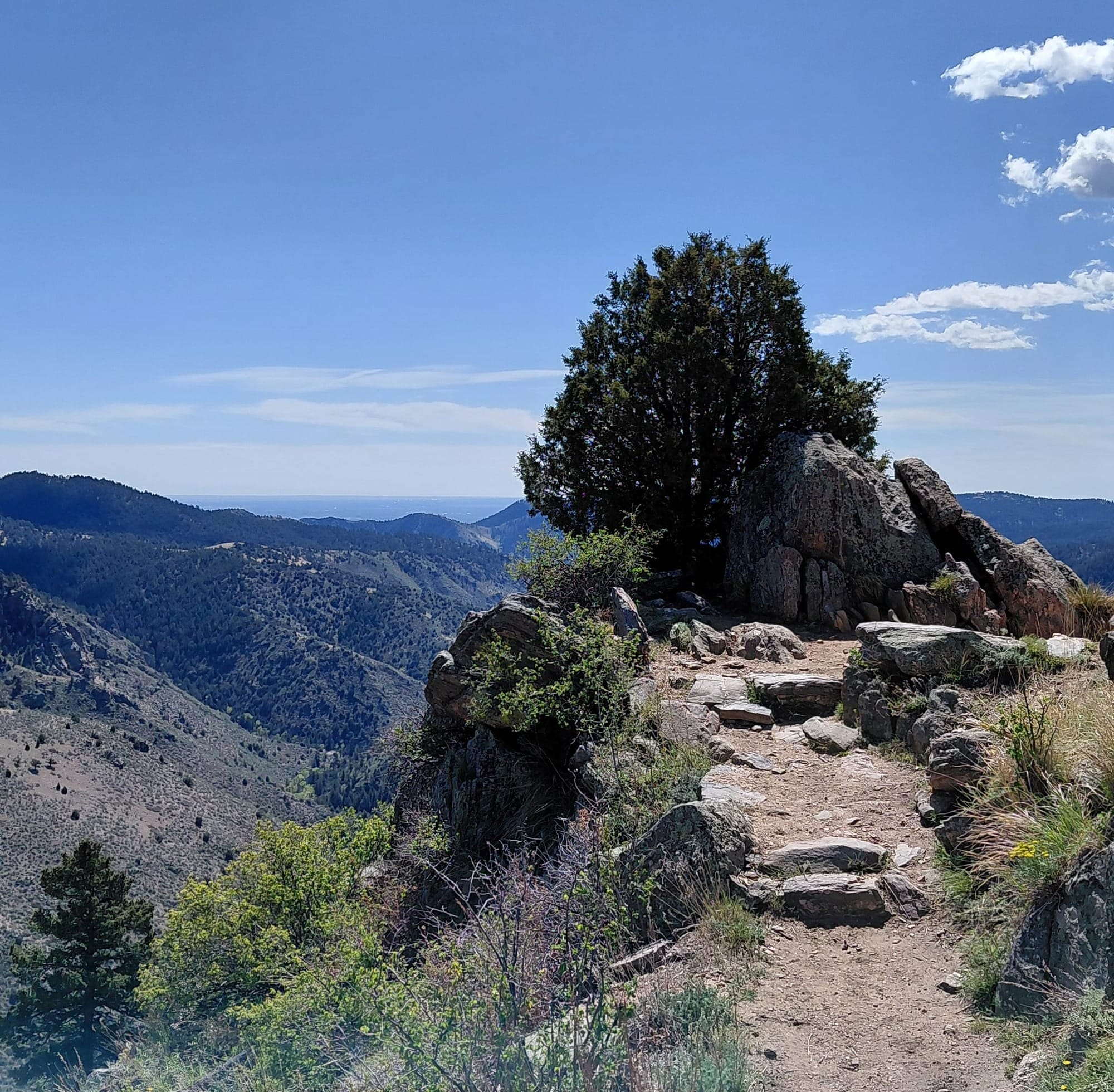
I'd be remiss, though, to let one shitty go-around dampen my overall experience of a park – especially one so convenient. I've been back back multiple times a year since that ill-fated hike, and while I've never come prepared or adventurous enough to try the whole thing, I've seen it at enough angles to get a good sense of the place. In my opinion, early summer's the best time to come up here because it's peak wildflower season on the front range. Blooms have come up in reduced force this year due to the mild winter and dry spring, but native plants are resilient, and so we're still seeing a pretty nice show from our local wildflowers.
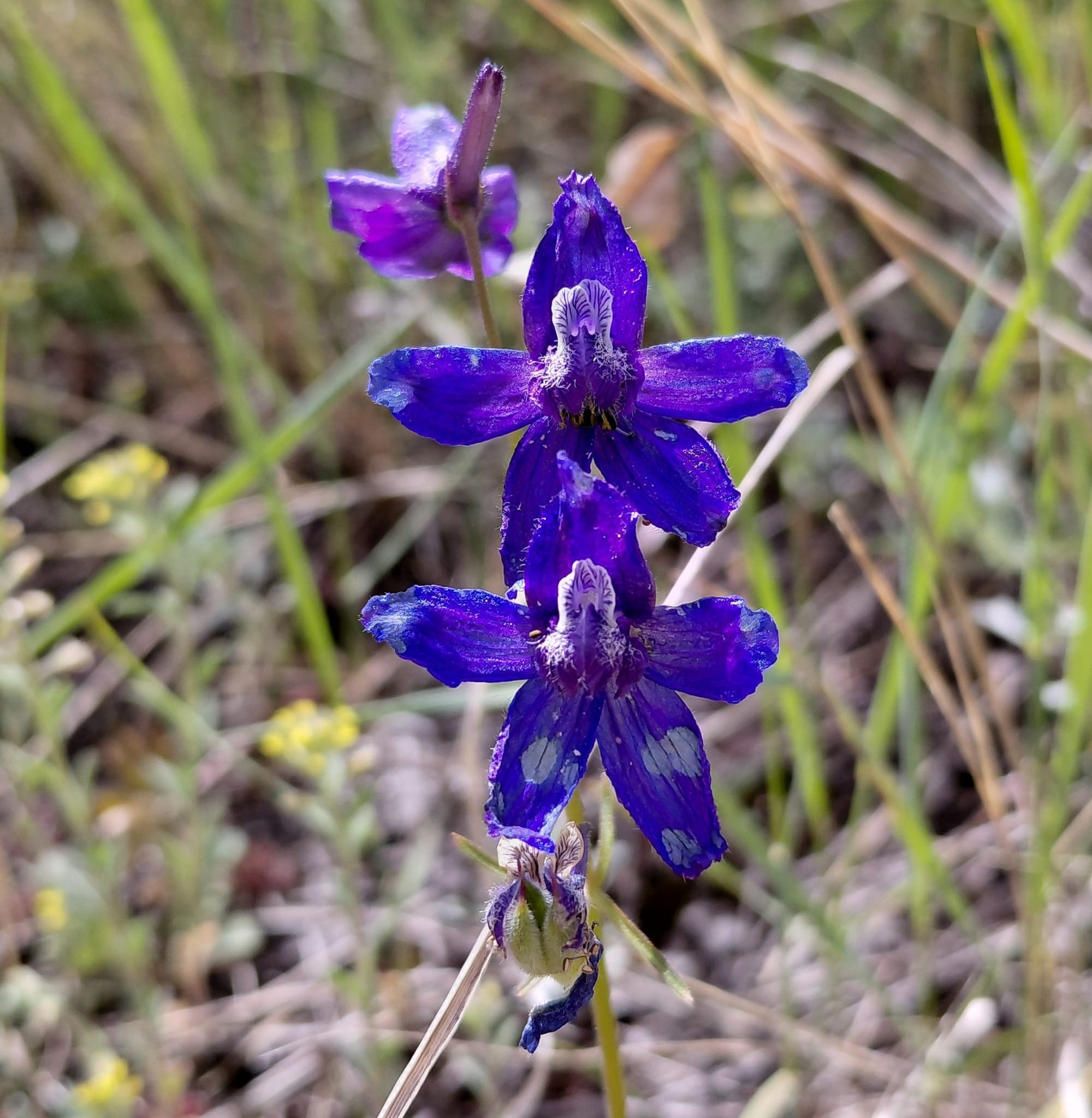
Around this time of year you're likely to find the upland larkspur (also known as two-lobed larkspur or nuttall's larkspur) on montane and subalpine trails. One of many larkspurs to find its home in Colorado, you can easily spot this plant by its royal purple flowers (it's hard to communicate their true color even through a photograph – my phone's camera often adjusts it to indigo). It's best distinguished from other larkspurs by its seasonality – of the purple larkspurs I've seen in Colorado, few of them are known to bloom around May – and its two central petals, which form a white filigreed hood. It's distributed gregariously across the intermountain west, from British Columbia Down into Southern California and New Mexico. Wherever you find ponderosa forests, you're apt to find D. nuttallianum.
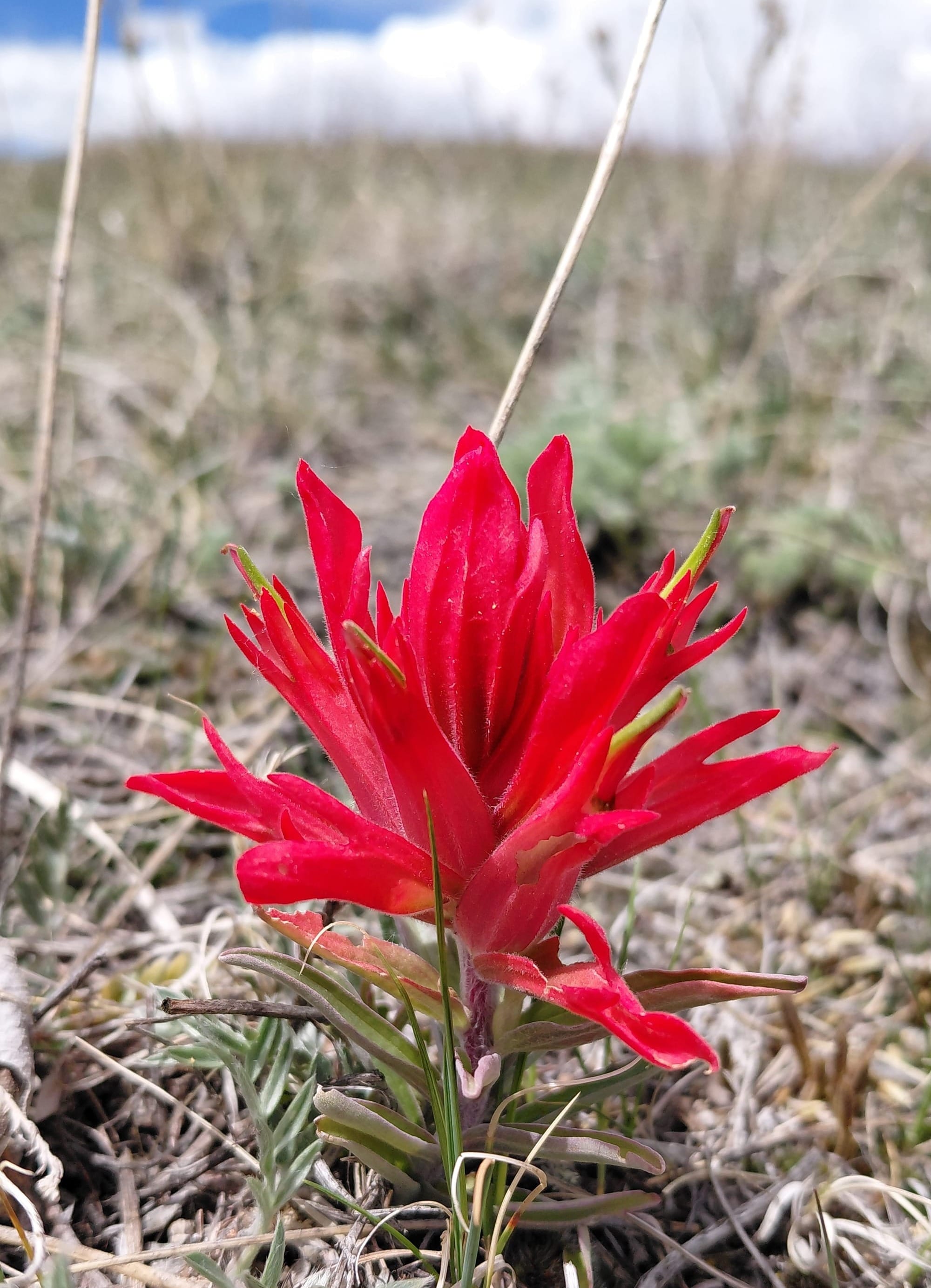
No panoramic field photo of the American interior is complete without at least one species of paintbrush (genus Castelleja): to borrow a sartorial turn of phrase, they serve as the landscape's "pop of color." Seriously, you could land an airplane with one of these bad boys – they're not at all hard to spot from the trail.
Paintbrushes are tough as nails: at least one species fits into each Colorado biome, with the most common species – Castelleja integra – enjoying a widespread distribution in even the state's harshest climes. This is particularly strange because Castellejas are hemiparasitic, and cannot successfully live without a host plant (though they're capable of photosynthesizing on their own, and don't necessarily need a host to germinate).
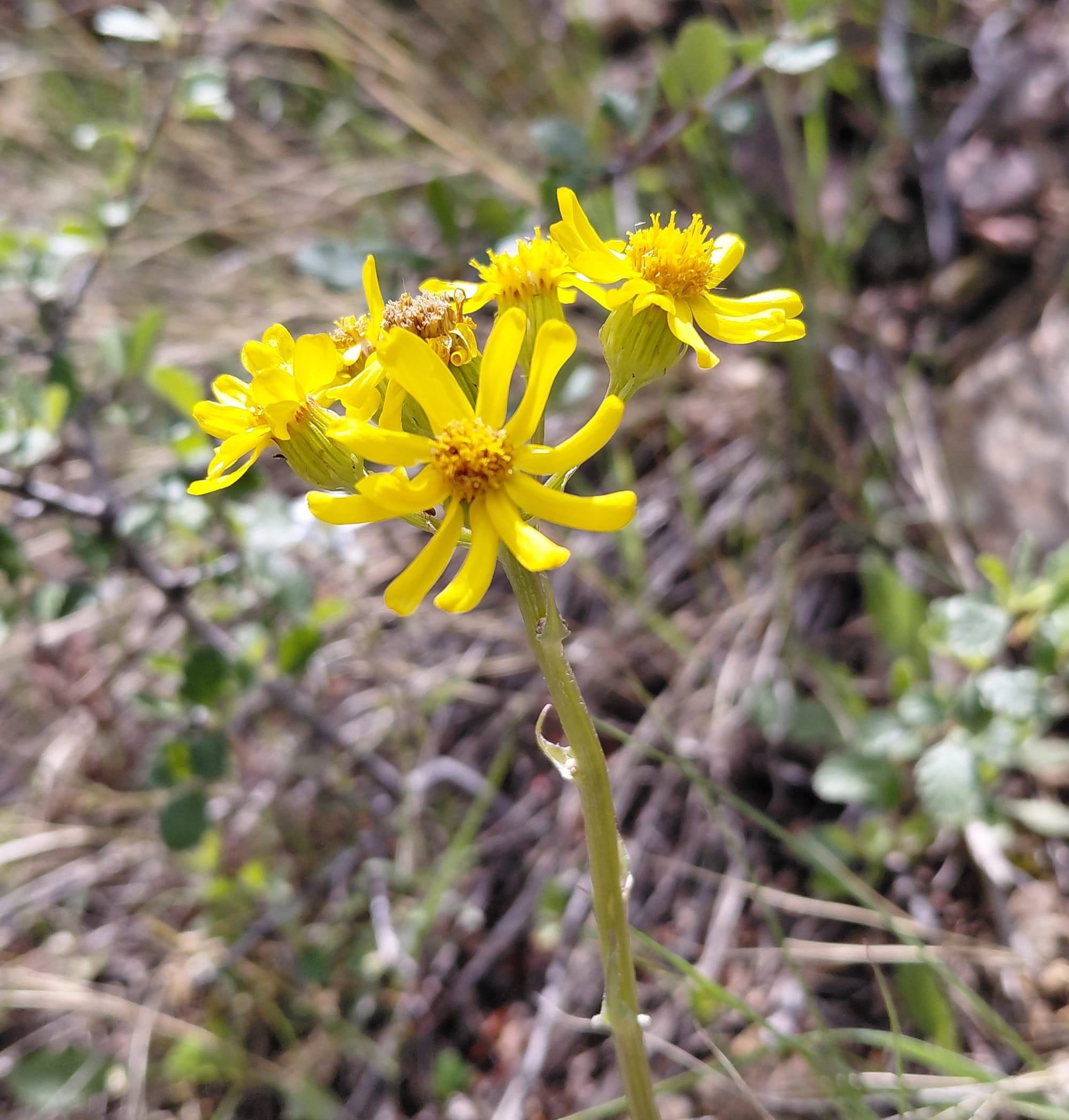
It's difficult to summarize the groundsels because there are so damn many of them. Try to think of a particularly speciose genus: it might have, what, 500 to 1,000 species total? The genus Senecio contains – to contrast – nearly 1,500 species under its taxonomic umbrella, distributed worldwide. If you're familiar with the popular houseplant String of Pearls, that is a species of Senecio (or rather it used to be, for reasons we'll cover momentarily. It's now called Curio rowleyanus, but I still consider it an honorary Senecio). To offer a point of contrast, the Giant Groundsels of Mount Kilamanjaro are also a part of the Senecio clade (though they have also been reclassified in recent years to Dendrosenecio); one small succulent, one dendriform herb – both of them at one time a part of this genus.
To your average person, this is impressive. To a plant taxonomist, however, this is a nightmare. Senecio is what we refer to as a paraphyletic clade, meaning that it contains plants of mixed or (relatively) unknown evolutionary origin. For taxonomists, whose overall project is to link organisms to a single common ancestor, megaclades like these are ripe for recharacterization. It's hard, as an outside observer, to say what the future will look like for the genus, but I predict more of these segregant classifications to be broken off in the coming decades. Perhaps the name itself will be retired, or maybe elevated to a subfamily classification, delineating its own sector of the Aster family tree: "Senecionidae." But I'm going on a tangent now, aren't I?
I'm used to seeing two native groundsels on the front range, living on opposite ends of the summer season. The one pictured here, Senecio integerrimus, blooms right at the beginning of the season, and goes to flower very soon afterward. Then, as we move into late August and early September, we begin to see the broom-like ragwort – S. spartoides – blooming in parts of the front range. Two bookends of the growing season: one to usher it in, the other to bid it farewell.